To study the size of the basins, character of the rocks, and structure of the Bering shelf.
Description
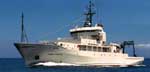
University of Washington,United States Geological Survey, Menlo Park, California. Chief Scientist: Dave Scholl. Geological and Geophysical data (magnetics, chaindredge, seismic, Shipekgrab, VanVeengrab, LoranA, radar) of field activity T-1-67-BS in Bering Sea, Alaska from 07/16/1967 to 07/21/1967
Location
Alaska
Summary
Magnetic data and continuous seismic-reflection profiles were obtained along nearly 1,800 km of track, concentrated mostly in the northern Bering Sea; in addition, about 100 bottom samples and dredge hauls were taken. Interpretation of deep-penetration seismic profiles revealed a series of deep basins containing as much as 2,000 m of sediments. Dredge haul obtained shows that the acoustic basement on the continental margin consists of turbidites of late Cretaceous (Campanian) age. Rocks smapled by dredge hauls in the Pribilof Canyon and boreholes offshore at Nome show that the thick sedimentary cover in the basins is mostly of Neogene age. Upper Miocene marine rocks are present at the continental margin, and upper Miocene or Pliocene marine sediments are present off Nome. The size of the basins, character of the rocks, and abundance of minor broad folds indicate that the Bering shelf has a large and entirely unexpected petroleum potential.