Nahant to Gloucester, sea floor photographs and bottom samples analyses acquired during ground validation sampling

Metadata also available as - [Outline] - [Parseable text] - [XML]

Frequently anticipated questions:


What does this data set describe?

Title:
Nahant to Gloucester, sea floor photographs and bottom samples analyses acquired during ground validation sampling
Abstract:
This report presents high-resolution maps of the seafloor offshore of Massachusetts, from Nahant to Gloucester. Approximately 134 km² of the inner shelf were mapped with a focus on the nearshore region in water depths less than 40 m. The maps were prepared as part of a cooperative mapping program between the U.S. Geological Survey (USGS) and the Massachusetts Office of Coastal Zone Management (CZM). They are based on marine geophysical data, sediment sampling, and bottom photography obtained on two research cruises carried out in 2003 and 2004. The primary objective of this program is to develop a suite of seafloor maps that provide geologic information for management of coastal and marine resources. Accurate maps of seafloor geology are important first steps toward protecting fish habitat, delineating marine reserves, and assessing environmental changes due to natural or human impacts. The maps also provide a geologic framework for scientific research, industry and the public.
Supplemental_Information:
The original report did not include separate metadata files for these data, so the metadata file was created at a later date (2025). Additional information about the activity that acquired the data can be found at: https://cmgds.marine.usgs.gov/services/activity.php?fan=2004-002-FA
  1. How might this data set be cited?
    Andrews, Brian D., 2006, Nahant to Gloucester, sea floor photographs and bottom samples analyses acquired during ground validation sampling: Open File Report 2005-1293, U.S. Geological Survey, Coastal and Marine Geology Program, Woods Hole Coastal and Marine Science Center, Woods Hole, Massachusetts.

    Online Links:

    This is part of the following larger work.

    Barnhardt, Walter A., Andrews, Brian D., and Butman, Bradford, 2006, High-Resolution Mapping of the Inner Continental Shelf: Nahant to Gloucester, Massachusetts: Open-File Report 2005-1293, U.S. Geological Survey, Reston, VA.

    Online Links:

  2. What geographic area does the data set cover?
    West_Bounding_Coordinate: -70.909698
    East_Bounding_Coordinate: -70.7068174
    North_Bounding_Coordinate: 42.569156
    South_Bounding_Coordinate: 42.411826
  3. What does it look like?
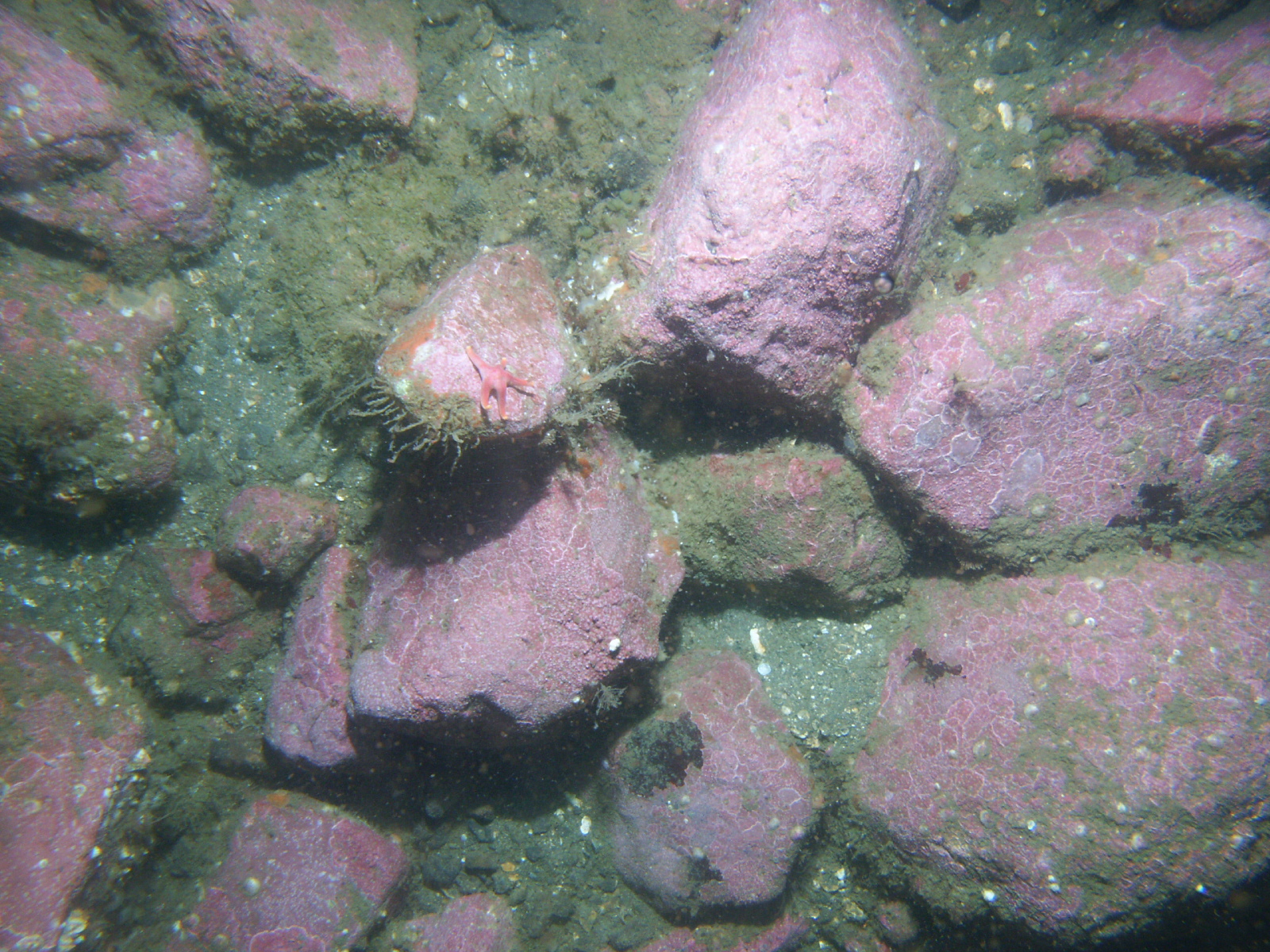
    https://pubs.usgs.gov/of/2005/1293/images/pict0409.jpg (HOEG)
    Example of a bottom photograph from the study area.
  4. Does the data set describe conditions during a particular time period?
    Beginning_Date: 06-May-2004
    Ending_Date: 08-May-2004
    Currentness_Reference:
    ground condition of acquistion
  5. What is the general form of this data set?
    Geospatial_Data_Presentation_Form: raster
  6. How does the data set represent geographic features?
    1. How are geographic features stored in the data set?
    2. What coordinate system is used to represent geographic features?
      Horizontal positions are specified in geographic coordinates, that is, latitude and longitude. Latitudes are given to the nearest 0.00001. Longitudes are given to the nearest 0.00001. Latitude and longitude values are specified in decimal degrees. The horizontal datum used is D_WGS_1984.
      The ellipsoid used is WGS_1984.
      The semi-major axis of the ellipsoid used is 6378137.000000.
      The flattening of the ellipsoid used is 1/298.257224.
  7. How does the data set describe geographic features?
    Entity_and_Attribute_Overview:
    The bottom photos as published do not have spatial information, however the associated image locations and sediment sample files do.
    No attempt was made to write the detailed entity and attribute information for the sediment texture data. For these data, see Poppe and others (2000, https://doi.org/10.3133/ofr00358) for a description of the procedures for sediment texture analysis. Hastings and others (2000, https://doi.org/10.3133/ofr00358) provide a data dictionary describing the column headings in the Excel spreadsheet SEDBA1_RAFA04002.xls. I believe the dates presented in the file refer to analysis dates.
    Collection dates are reflected in the field ID through the julian day. For example, STA100JD127 would be May 6, 2004.
    A total of 585 bottom photographs were obtained at 100 stations for this study. TableA3_1.xls is an excel format file which lists all the bottom photographs grouped by station. Location information is in UTM zone 19 eastings and northings.
    Entity_and_Attribute_Detail_Citation: U.S. Geological Survey

Who produced the data set?

  1. Who are the originators of the data set? (may include formal authors, digital compilers, and editors)
    • Brian D. Andrews
  2. Who also contributed to the data set?
  3. To whom should users address questions about the data?
    Brian Andrews
    U.S. Geological Survey
    Marine Geographer
    384 Woods Hole Rd.
    Woods Hole, MA
    USA

    508-548-8700 x2348 (voice)
    508-457-2310 (FAX)
    bandrews@usgs.gov

Why was the data set created?

The remotely-sensed data collected as part of this study were validated with direct sampling of the surficial sediments and photographs of the seafloor. The ground validation portion of the project commenced immediately following the conclusion of the geophysical surveys in May 2004. One hundred target stations were identified prior to the survey for sampling and photography with the USGS Mini SEABed Observation and Sampling System

How was the data set created?

  1. From what previous works were the data drawn?
  2. How were the data generated, processed, and modified?
    Date: 2004 (process 1 of 2)
    The ground validation portion of the project commenced immediately following the conclusion of the geophysical surveys in May 2004. One hundred target stations were identified prior to the survey for sampling and photography with the USGS Mini SEABed Observation and Sampling System (Mini SEABOSS; Valentine and others, 2000, https://doi.org/10.3133/fs14200). Stations were selected based primarily on the previously collected acoustic backscatter data, with the objective of characterizing broad areas of different backscatter intensity. In addition, the sampling design included investigation of both gradual and sharp transitions in backscatter values, inferred to be differences in substrates. The research vessel occupied the target location (+/- 10 m), deployed the Mini SEABOSS and drifted with the current over the bottom at approximately 1-3 knots. Continuous video was collected while the camera was within sight of the bottom and photographs were obtained from a still camera at user-selected locations along the transect. Samples of the surficial sediment were usually collected at the end of the drift transect. The upper 2 cm of sediment were scraped from the surface of the grab for textural analysis. At each station about 5 minutes of video and about 5 bottom photographs were obtained.
    Sediment samples were collected at locations with relatively soft sediment (sand or mud) where the Mini SEABOSS would not be damaged. Samples were not collected in cobble or rocky regions. Samples were analyzed for grain size at the USGS Sediment Laboratory. Poppe and Polloni (2000, https://doi.org/10.3133/ofr00358) describe the standard procedure for grain size textural analysis
    This information was copied from the report to assist in generating this metadata file.
    Date: 23-Sep-2025 (process 2 of 2)
    This metadata file was written based on information from within the report and existing metadata. It's possible some elements that should have been removed were not removed. The original publication did not provide metadata for this dataset. Additionally, this metadata file provides links in the distribution section to the Excel spreadsheet of the sample analyses that was part of the ground truthing. That link is available in the report, but not as a separate link on the Appendix 1 - Geographic Information System page. The data is also available as part of the personal geodatabase. Added USGS persistent identifier as theme keyword. (20250923) Person who carried out this activity:
    U.S. Geological Survey
    Attn: VeeAnn A. Cross
    Marine Geologist
    384 Woods Hole Rd.
    Woods Hole, MA

    508-548-8700 x2251 (voice)
    508-457-2310 (FAX)
    vatnipp@usgs.gov
  3. What similar or related data should the user be aware of?

How reliable are the data; what problems remain in the data set?

  1. How well have the observations been checked?
  2. How accurate are the geographic locations?
    The report indicates that the research vessel occupied the target location (+/- 10 m) for instrument deployment. Additional inaccuracies can probably be included associate with the instrument drifting away from the research vessel.
  3. How accurate are the heights or depths?
    The report does not seem to indicate the source of the depth values that are present in the sediment texture analysis data.
  4. Where are the gaps in the data? What is missing?
    Information not available.
  5. How consistent are the relationships among the observations, including topology?
    Information not available.

How can someone get a copy of the data set?

Are there legal restrictions on access or use of the data?
Access_Constraints No access constraints. Please see 'Distribution Information' for details.
Use_Constraints These data are marked with a Creative Commons CC0 1.0 Universal License. These data are in the public domain and do not have any use constraints. Users are advised to read the dataset's metadata thoroughly to understand appropriate use and data limitations. Please recognize the U.S. Geological Survey (USGS) as the source of this information.
  1. Who distributes the data set? (Distributor 1 of 1)
    Brian Andrews
    U.S. Geological Survey, Woods Hole Science Center
    Marine Geographer
    384 Woods Hole Rd.
    Woods Hole, MA
    USA

    508-548-8700 x2348 (voice)
  2. What's the catalog number I need to order this data set? The sediment texture analysis data is available as part of the personnal geodatabase (which requires the download of a large folder), or as an Excel spreadsheet (SEDBA1_RAFA04002.xls). The image locations (with eastings and northings) are available in an Excel spreadsheet (tableA3_1.xls) and the bottom photogrphs are available in a single ZIP file (BottomPhotos.ZIP)
  3. What legal disclaimers am I supposed to read?
    Unless otherwise stated, all data, metadata and related materials are considered to satisfy the quality standards relative to the purpose for which the data were collected. Although these data and associated metadata have been reviewed for accuracy and completeness and approved for release by the U.S. Geological Survey (USGS), no warranty expressed or implied is made regarding the display or utility of the data for other purposes, nor on all computer systems, nor shall the act of distribution constitute any such warranty.
  4. How can I download or order the data?
  5. What hardware or software do I need in order to use the data set?
    The user must be capable of uncompressing the zip file and reading the Excel formatted data..

Who wrote the metadata?

Dates:
Last modified: 23-Sep-2025
Metadata author:
U.S. Geological Survey
Attn: VeeAnn A. Cross
Marine Geologist
384 Woods Hole Rd.
Woods Hole, MA
USA

(508) 548-8700 x2251 (voice)
(508) 457-2310 (FAX)
whsc_data_contact@usgs.gov
Contact_Instructions:
The metadata contact email address is a generic address in the event the person is no longer with the U.S. Geological Survey.
Metadata standard:
FGDC Content Standards for Digital Geospatial Metadata (FGDC-STD-001-1998)

This page is <https://cmgds.marine.usgs.gov/catalog/whcmsc/open_file_report/ofr2005-1293/bottom_photos.faq.html>
Generated by mp version 2.9.51 on Wed Sep 24 10:44:33 2025